Showing posts with label flowering trees. Show all posts

Friday, May 11, 2012

Dog Days of Spring

One of my favorite spring flowering trees is the native dogwood (Cornus florida).  In my neck of the woods, flowering dogwoods light up the shady woodlands with their big white blossoms this time of year.  They look so ornamental that most would suspect they were planted as part of a master landscape plan.  I didn't have any of these "wild" trees on my own land when I started gardening so I have added a few over the years.  I didn't treat them like specimen trees, but planted them at the woodland edge like Mother Nature would.

The white dogwood pictured here has bloomed reliably since I first brought it home from Home Depot several years ago.  It has doubled in height and width since planting.  In very dry summers, it does get powdery mildew, but never loses its leaves.

I also have a larger pink dogwood cultivar that I bought from a nursery years before the white one.  I would love to show you pictures of its blooms, but there aren't many and most are on the top of tree, requiring you to get up high to see them.  The tree has grown well, but has never produced an abundance of flowers.  I think this pink cultivar may require more sun than it gets to set blooms.

After seeing so many dogwoods peaking out from the woods on my drive to work this week, I think I may poke a few more into my woodland setting this year.   I'll skip the expensive ones at the nurseries and look for a few more from Home Depot.  I'm sure those are already on sale.


Saturday, March 10, 2012

Aloha from the Philly Flower Show

Prize-winning orchid
This week, I went to my first big flower show,  the Philadelphia International Flower Show managed by the Pennsylvania Horticultural Society.  With the theme "Hawaii: Islands of Aloha",  I wasn't sure what to expect.  Attending this famous winter flower show had been on my to-do list for years.

The show included many rather elaborate garden displays, recreating lush tropical landscape designs that celebrated the flora of the Hawaiian islands.  Tons of orchids, bromeliads, birds-of-paradise, palms, warm-weather grasses were planted among lava rocks, logs and sand.  Some exhibits had towering waterfalls while others had small lagoons.  A colorful departure from the Northeast winter landscape outside the convention center.  But like a trip to Hawaii, I would have to leave most of these plants and designs behind when I returned to my USDA Zone 7a.


Lava rock garden

There were several displays showcasing vegetable gardens.  One that stood out was a vertical garden of lettuce growing on the side of a shed.  Wouldn't this be wonderful if this really worked?  I could finally have a vegetable garden without sacrificing perennials.

Seven varieties of lettuce growing on a 40-foot wall

Another highlight was the "Store Window" exhibits.  Very inventive designers used tropical plants to create eye-catching displays, celebrating the Hawaiian theme.

"Eye-catching" store window display

A fun way to display plants indoors

VERY colorful spring display
I did find a few exhibits with more familiar plantings, including azaleas, spring bulbs and dogwoods forced into bloom.  And from some of these displays,  I did get some new and relevant ideas for my Hamptons garden.

Like a big state fair, there were many contests for outstanding plants, including orchids, begonias, hanging baskets, succulents, bonsai trees, and bulbs.  The number and variety of orchids was incredible. (I'm not sure I'll be satisfied with the King Kullen grocery's $29.99 Phalaenopsis any longer.)

There were quite a few displays of floral arrangements.  Some left me wondering what these designers would think of my simple, garden-inspired compositions.  Like Crayola drawings compared to Picasso sketches.

Simply dramatic floral arrangement

With a tropical show theme,  I hadn't expected to buy anything from the huge marketplace of garden vendors.  That turned out not to be the case.  I returned to my car with bags filled with gorgeous orchids, violets, vegetable seeds, and porcelain vases.  I might have bought more, but it became increasingly difficult to navigate the aisles with big bags as the crowds increased.

Begonia candidates ready for their close-up

A nice day trip and really close to New York City.  The show runs through tomorrow, March 11th.  If your looking for a Sunday activity, check it out: www.theflowershow.com.

A hui hou (Good-bye, until we meet again)!


Monday, February 27, 2012

And the Winner Is...

Inspired by last night's Oscars, I thought it might be nice to give a shout-out to the stars of my garden last year.  Overall, it turned out to be one of the best seasons (even though Hurricane Irene stormed the stage during Act III).  Stellar performances were made by both established plants and young, rising stars.


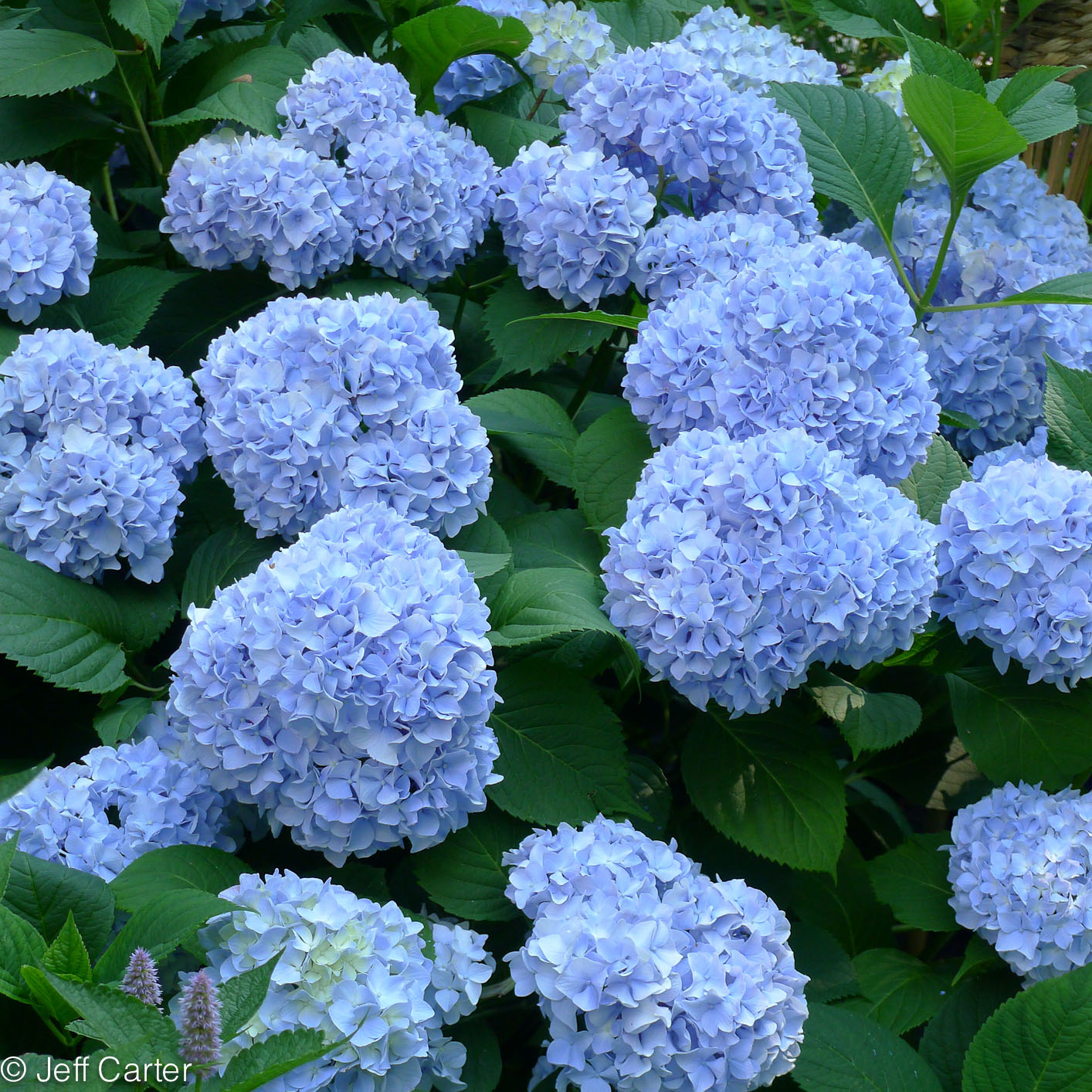
✯ My first award goes to the best "comeback".  After several seasons of lackluster presentatons, Hydrangea macrophylla 'Nikko Blue' came back this past season with the most blooms ever.  Following a spectacular opening in June, this hydrangea returned to the stage periodically all summer with fresh, blue flowers.

Nikko Blue hydrangea
✯ Best overall performance last year was from the June blooming Kousa Dogwood (Cornus kousa). Huge, creamy blooms covered every branch.  Unfortunately, this woody star always needs a season off following such a packed performance.  2012 will predictably be a less inspiring show.

Kousa dogwood
✯ The award for best plant in a supporting role goes to my Ostrich ferns (Matteuccia struthiopteris). They are so easy to grow.   I use them all over the garden to help frame other plants, fill in large shaded areas and add low-maintenance drama.

Ostrich fern
✯ The best new performer of the season was the Echinacea purpurea 'B's Knees'.  I discovered this new star at a local nursery last year.  Its deep magenta color and lower height made this coneflower perfect for the expanded bed behind the pool.

B's Knees coneflower
✯ Best visual effects goes to my favorite autumn performer, Aster oblongifolius 'Raydon's Favorite', which took on a more important role after being divided to fill a much larger stage.  The huge drift of blueish-purple asters seem to echo the fall sky.

Raydon's Favorite aster
✯ And I have to give a lifetime achievement award to Hemerocallis 'Hyperion'.  Like Meryl Streep, this icon continues to give strong performances every season.  Tall, bold and fragrant, Hyperion daylilies put on a show not to be missed in my Hamptons Garden.

Hyperion daylily
✯ I thought we should have one award for a foreign production.  One standout from my trip to Italy last year was this purple bearded iris.  I have always loved this type of iris, but have yet to plant any. Maybe this will be the year to put one to work in my show.


Purple bearded iris in Florence, Italy
With the wacky weather we've had so far this year, it's anyone's guess which plant will steal the spotlight in 2012.  So stay tuned.

Friday, February 24, 2012

Another Must-Have for Your Bookshelf (and iPhone)

Recently, I proclaimed my adoration for The Well-Tended Perennial Garden by Tracy DiSabato-Aust.  Today, I'd like to share with you my go-to book for trees and shrubs.  Dirr's Hardy Trees and Shrubs: An Illustrated Encyclopediaby Michael Dirr was one of the most useful birthday gifts that I've ever received.

When I was given this tome, I was just beginning my garden (click here for a look back at my blank canvas).  I desired trees and shrubs that looked natural but also added some drama.  Of course, I also needed them to be suitable for my specific climate and growing conditions.

Each Saturday morning at the breakfast table, I would start flipping through this book filled with hundreds of landscape and close-up shots of woody plants.  When a tree or shrub caught my eye,  I would stop and read Dirr's personal comments about the candidate, allowing me to judge its suitability.  Along with his personal experiences, Dirr shares the plant's potential size, appropriate growth zones and origins (very helpful when trying to choose native plants).  He also lists well-known cultivars and varieties.  After shopping through this book, I would then visit local nurseries trying to find my chosen specimen—often with book in hand.

Dirr also wrote a companion book, Manual of Woody Landscape Plants.  This was included with my initial gift.  This manual gives much more detailed information on each plant's growing requirements, complete descriptions of leaf/flower shapes and colors, line drawings to help identify leaves and buds, and thorough descriptions of cultivars. I've learned that both of these earlier books are now merged in a revised edition, Dirr's Encyclopedia of Trees and Shrubs.


Sometimes, I can be a bit old-fashioned.  I still like printed books.  However, Dirr's Tree & Shrub Finder app for the iPhone is truly amazing! (At $14.99 it's the most expensive app I've purchased thus far, but I know it will get a lot of use.)

You can search for plants by common name or scientific name.


Don't know the exact plant you want or need?  You can search by light demands, moisture requirements, hardiness zones, plant size, growth rate, foliage type, flower color, blooming season, etc.


It's filled with photos so you can hold it up to your garden and see how a plant might look there.  You can also leave the big books at home. Take the app to the nursery.  How convenient!


Whether you're a print book person or a digital person (or both like me), Michael Dirr makes it easy and fun to choose the best trees and shrubs for your garden.  However, you're still stuck with the hard work of planting.


Tuesday, February 14, 2012

Roses Are Red — Just Not Here!

Geranium 'Orkney Cherry' with ultra
pink petals and white throat
On this occasion when millions of red roses are gifted,  I thought I'd share my aversion to pure red flowers in my Hamptons garden.  This might be a shocking admission from a plantaholic that rarely meets a flower that he doesn't fall in love with.  But for me, pure red just looks unnatural in all but the most tropical garden settings.  I also consider pure red to be too bold, stealing that the show from all of its quieter neighbors.

However, add a little blue or yellow to the pigment and my opinion changes pretty quickly.  Even a little brown tones down pure red,  allowing it to play well with others.  So in my garden, you will find various shades of pink, orange, violet-red, fuchsia, wine, brick-red, plum, magenta, etc.  Just not a pure red.


Berry-red Monarda 'Raspberry Wine'
Design experts say that when choosing colors for your interiors, look at your own wardrobe for colors that you truly love and can live with.  I think that's equally true of exteriors spaces.  If you look in my closet, you won't find one article of pure red.  So like my garden in summer, I am personally more likely today to be donning cerise than the color of the red roses in your bouquet.

Nevertheless, I wish everyone a very Happy Valentine's Day!


Wednesday, November 2, 2011

Let's Get Something Started

Japanese Stewartia dressed for fall
Seems like it's taking much longer for the leaves in and around my Hamptons garden to peak this year.  Autumn has been very wet and cool with little color.  I dream of sunny days when the garden and adjacent woodland burst with orange, yellow and red foliage.

Luckily, my Japanese Stewartia (Stewartia pseudocamellia var. japonica) was on schedule.  Always one of the first trees in my garden to put on a colorful show,  some leaves turned a bronzed red and others a deep orange.

I read that orange and yellow pigments are always present in deciduous leaves but camouflaged by the green pigment of chlorophyll during the summer months.  When photosynthesis stops and the green chlorophyll disappears, the other colors are revealed.  Red pigments are made mostly in the fall and are the result of trapped glucose reacting to sunlight and cold temps.  Just thought I'd share.

This Stewartia was planted about five years ago to help enclose the front lawn and partially screen out the parking area.  It produces a beautiful flower in mid-summer that looks like a Camellia blossom (guess that's where it gets the pseudocamellia part of its name).  The blossoms don't last more than a day before dropping to the ground, but it does produce flowers in abundance for weeks.

Hopefully, this is just a prelude to the fall foliage show.  However, when regions nearby get tree-damaging snow in October,  I'm thankful to have leaves of any color on unscathed trees.

Fall foliage
Summer blooms


Tuesday, June 21, 2011

Kousa Dogwoods


The Kousa dogwoods are spectacular this year. This picture was taken about a week ago. They seem to bloom like this one year with a less exuberant show the following year. Guess they need a year of recovery. The blooms will turn into prickly berries that turn red by autumn. The birds love them. And occasionally the squirrels will discover the tasty treats and gorge on them fighting away the birds.